Habits
The heat rules: straighteners, dryers and thinning hair

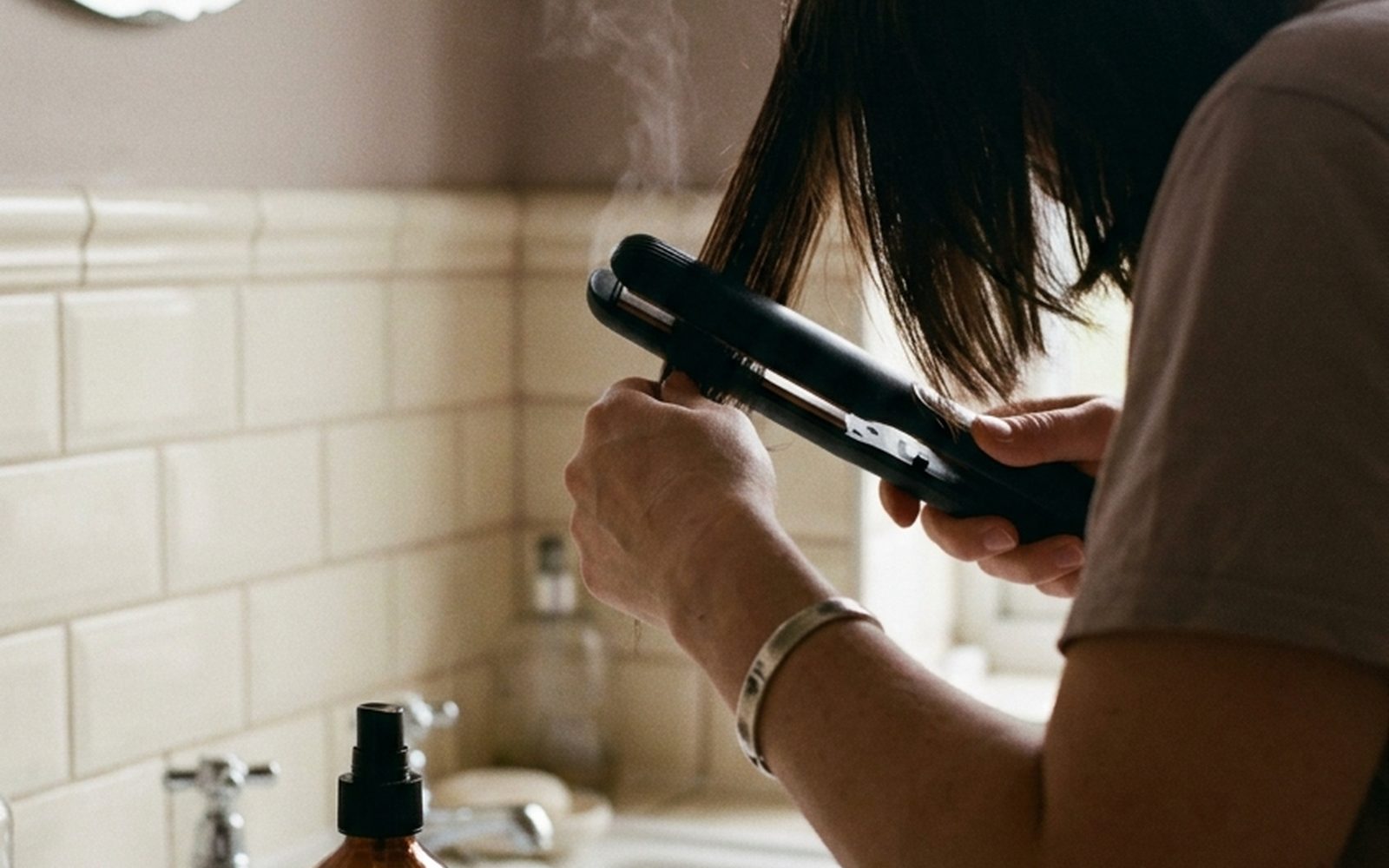
If I had to name the one thing that most often turns “a bit thinner” into “visibly thin”, it would not be a hormone. It would be a pair of straighteners at 230 degrees on hair that is already fine.
What heat does to a fibre
A hair is a protein rope wrapped in overlapping scales. Above about 180°C the protein inside starts to change structure and the water inside flashes to steam, blowing tiny cavities in the shaft. The scales lift and chip. Once, the hair recovers. Daily, it does not: it becomes porous, dull, brittle and snaps a few centimetres from the root. Miniaturised hair — the finer fibre a struggling follicle produces — has a thinner cortex and less cuticle to lose, so it fails first.
The numbers
Straighteners and tongs: 160 to 180°C is enough for fine hair; 200 for medium; nothing on a thinning head needs 230. If your tool has a single setting, it is probably 210 or above, and it is worth replacing with one that adjusts. Hairdryer: medium heat, held 15 cm away, kept moving. The hottest setting, close, on one section for the count of ten, is worse than straighteners.
The rules
Never heat wet hair. Water inside the shaft boils. Towel-blot, air-dry to nearly dry, then dryer on medium to finish. Straighteners only on completely dry hair.
Not sure which one is you?
Take the two-minute hair quiz
Twelve quick questions. We tell you what we think is going on, what to do about it, and we say so if it is something we cannot help with.
Start the quiz →Heat protectant, always, every time. It forms a thin film that slows heat transfer into the shaft and reduces moisture loss. It is the one styling product with real evidence. Spray on damp hair before the dryer and comb through.
One pass. Section the hair, straighten each section once, slowly. Three fast passes at high heat do far more damage than one slow pass at moderate heat.
Give it days off. Two or three heat days a week, not seven. A claw clip, a plait, a bun ring or a day of air-dried waves is a day the fibre recovers.
Keep the plates clean. Product residue burnt onto the plates creates hot spots and drags the hair. Wipe them when cold.
What the dryer can do for you
Used well, a dryer is the best tool a thinning head has, because it can put lift at the root. Dry the roots first with the hair pushed against its natural direction — head upside down or flipped to the opposite side — and only then style the lengths. The parting closes, the crown stands up. Finish with the cool button on the roots to set them. More in the haircut article.
How to tell if heat is part of your problem
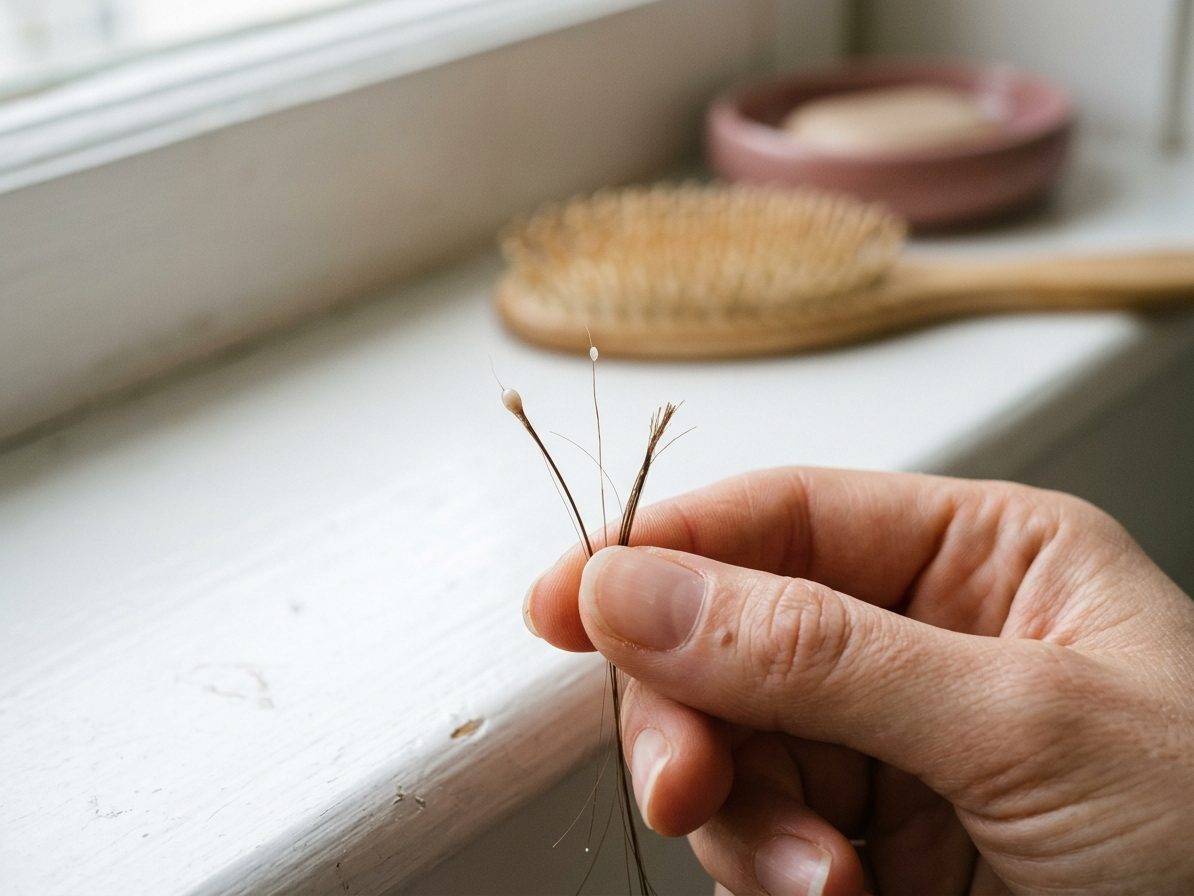
Broken hairs are blunt-ended and the same thickness as the rest; they collect at the same length, often a few centimetres from the root, and you find them on the sink and the shoulders rather than in the plughole. The ends of your hair are dry and split and the mid-lengths feel rough. If that is you, the breakage article confirms it and the fix is above. If the hairs you lose have a small white bulb at the end and are full length, heat is not the problem; the follicle is.
Ready to read your own pattern?
Take the two-minute hair quiz
Twelve questions. We tell you what we think is going on for you, and we say so if it is something a GP should see first.
Start the quiz →