Habits
The wash-day routine for thinning hair: what to change, in what order

I have written elsewhere on this site that shampoo cannot regrow hair, and I stand by it. But the way hair is washed, dried and slept on decides how much of what the follicle produces survives to full length. On thinning hair that margin matters. This is the routine, in order.
Before the water
Brush dry hair gently before washing, from the ends up, to remove tangles; wet hair tangles worse and stretches more. If the scalp is oily or heavy with product, a scalp oil or a few drops of squalane massaged in for five minutes first loosens the build-up so the shampoo has less to do.
Water temperature
Warm, not hot. Hot water strips the scalp’s oil, which the scalp then over-produces, and raises the cuticle so the fibre is more fragile while wet. A cool final rinse flattens the cuticle again.
Shampoo: the scalp, not the lengths
Shampoo exists to clean skin. Apply it to the scalp only, with the fingertips, and work it for a full minute — most people manage ten seconds. The lengths are cleaned by what runs through them when you rinse. Twice, if you use dry shampoo or styling products; once otherwise. A gentle sulphate-free shampoo for daily use; a clarifying or chelating shampoo once a week or fortnight to reset build-up and hard-water minerals (more here); an anti-fungal shampoo twice a week if the scalp flakes (more here).
Not sure which one is you?
Take the two-minute hair quiz
Twelve quick questions. We tell you what we think is going on, what to do about it, and we say so if it is something we cannot help with.
Start the quiz →Ignore “volumising”, “thickening” and “hair growth” on the front of a shampoo bottle. At best they coat the fibre so it feels thicker until the next wash. That is fine as cosmetics; it is not treatment.
Conditioner: the lengths, not the scalp
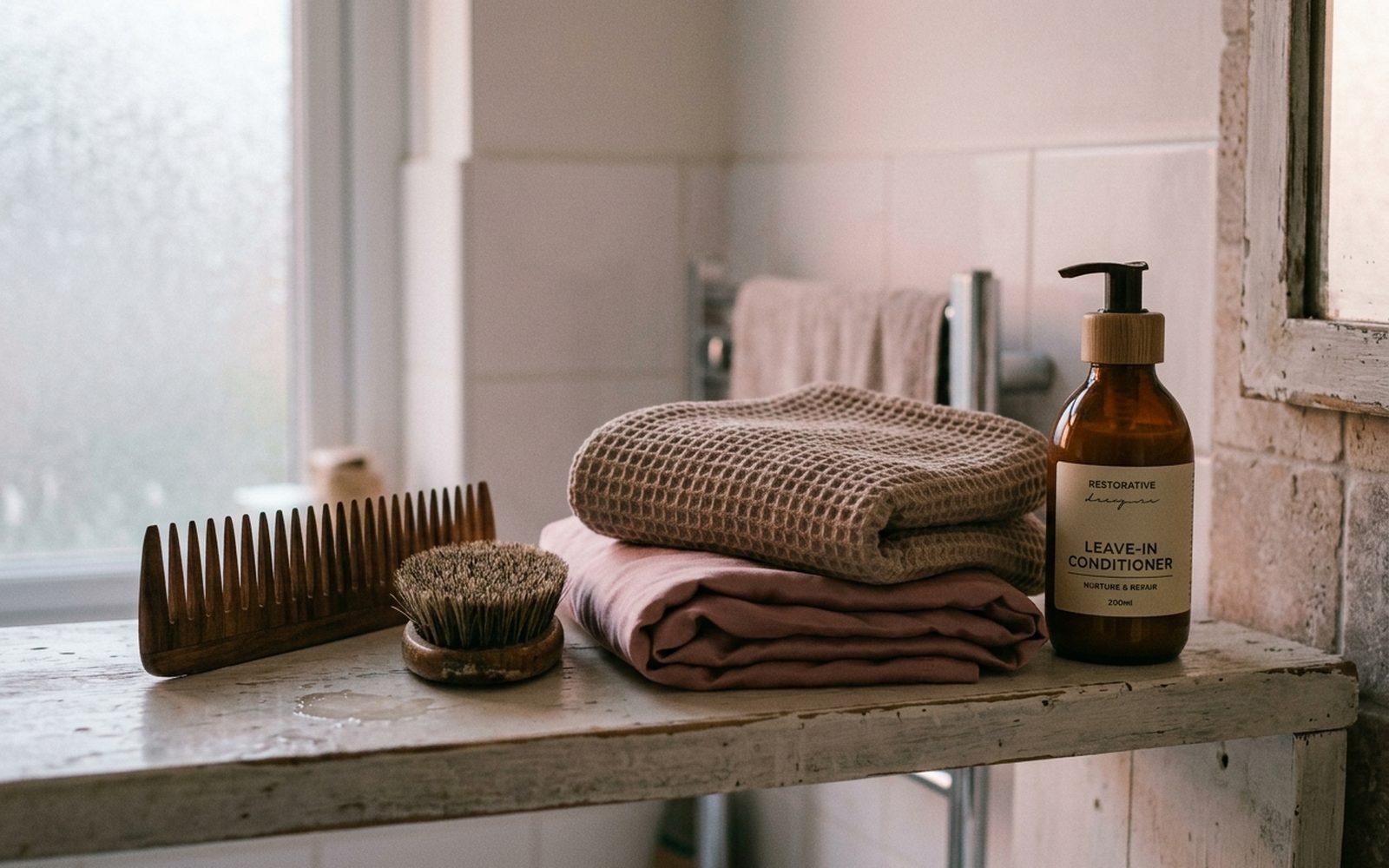
Conditioner on the scalp weighs the roots flat and adds to build-up. Apply from the ears down, comb through with a wide-tooth comb while it is in, leave for two minutes, rinse thoroughly. On fine hair a light conditioner; a heavier mask weekly if the ends are dry.
The leave-on scalp treatment goes here
If you are using a follicle-level scalp serum, the point in the routine to apply it is on a clean, towel-dried scalp, before any styling product. The scalp is clear of oil and product, the follicle openings are open from the warm water, and it has hours of contact before the next wash. Part the hair in sections, apply directly to the skin where the thinning is, massage in for a minute, and do not rinse.
Drying
Wet hair is at its weakest. Do not rub it with a towel; squeeze and blot, ideally with a microfibre towel or an old cotton T-shirt. Do not brush it wet; use a wide-tooth comb from the ends up if you must. Let it air dry to about seventy per cent before any heat, then blow-dry on medium with the roots pushed in the opposite direction to how they fall, for lift. Finish on cool. Straighteners under 180°C, with a heat protectant, never on damp hair.
Brushing
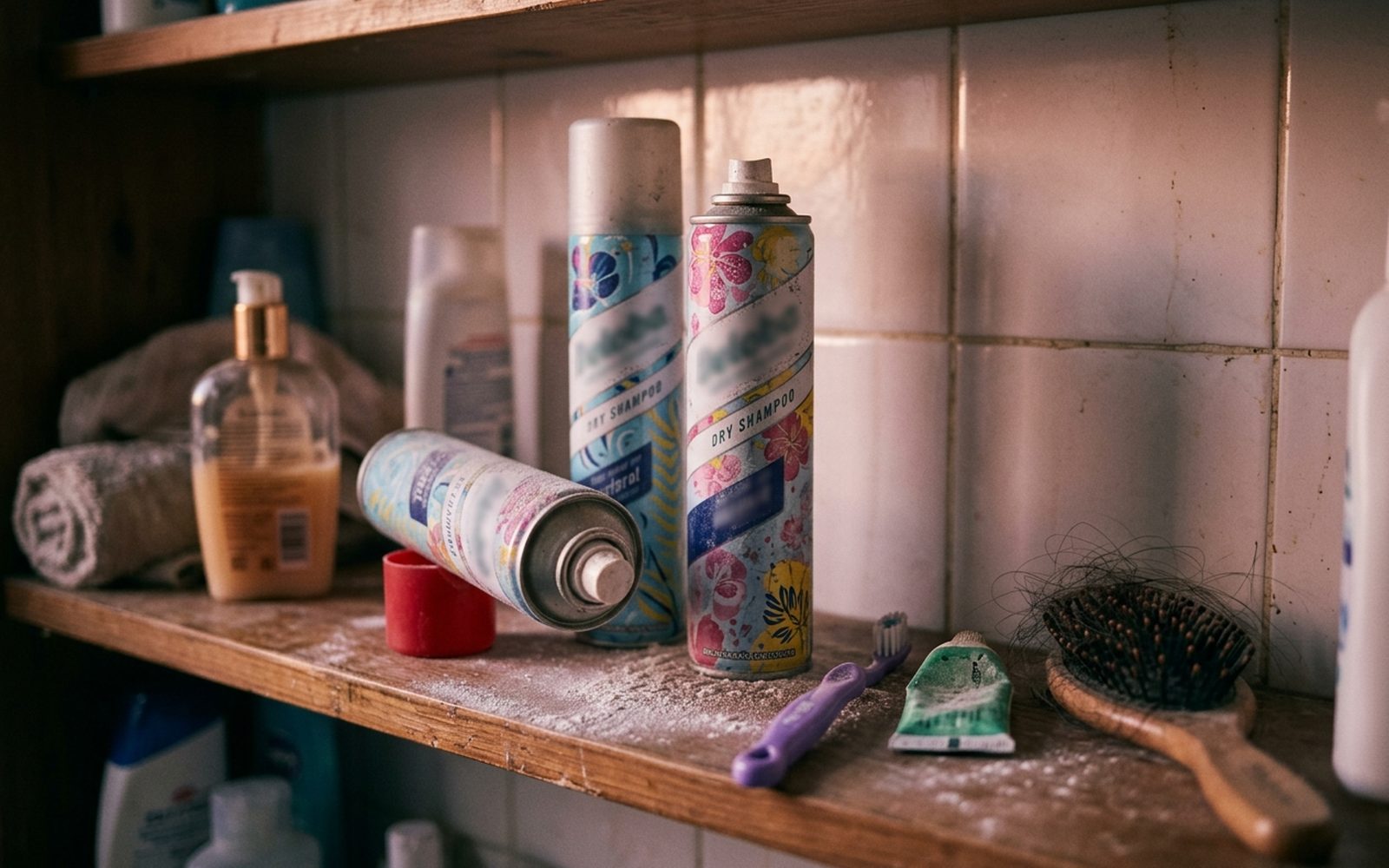
A soft boar-bristle or mixed-bristle brush for dry hair, once or twice a day, from the ends up. Not a hundred strokes; that is a myth that breaks hair. Clean the brush weekly — it is where dry shampoo, oil and shed hair collect and get redistributed.
Night
A silk or satin pillowcase reduces friction on the fibre and stops the hair being pulled while you turn; on fine hair it makes a visible difference to breakage at the crown and hairline over a few months. Hair down or in a loose low plait, never in a bobble.
What this routine cannot do
Everything above protects the fibre and keeps the scalp healthy, which is the floor. It does not restart a quiet follicle or reverse miniaturisation at the temples and parting, and no rearrangement of shampoo and conditioner will. If the routine is right and the parting is still widening, the reason is at the follicle. This article explains why, and what does reach it.
Ready to read your own pattern?
Take the two-minute hair quiz
Twelve questions. We tell you what we think is going on for you, and we say so if it is something a GP should see first.
Start the quiz →