Habits
The haircut that makes thin hair look thicker (and the three that make it look worse)
The women who look as if they have a lot of hair often don’t. They have hair that has been cut to look that way. The reverse is also true, and a great deal of the “my hair looks so thin” misery in this country is caused by cuts that were right for the hair a woman had at 28 and are wrong for the hair she has at 41.
Why length is the enemy of thin hair
A hair fibre is a lever. The longer it is, the more its own weight pulls it flat against the head, and the more the ends — which are always the oldest, most damaged and thinnest part — are on display. Long, fine hair does two things at once: it lies flat at the root, showing scalp, and it goes wispy at the end, showing sparseness. Every inch you take off improves both.
That does not mean you have to go short. It means the length should be chosen for the hair, and for most fine or thinning hair the sweet spot is somewhere between the jaw and the collarbone.
The cut that works
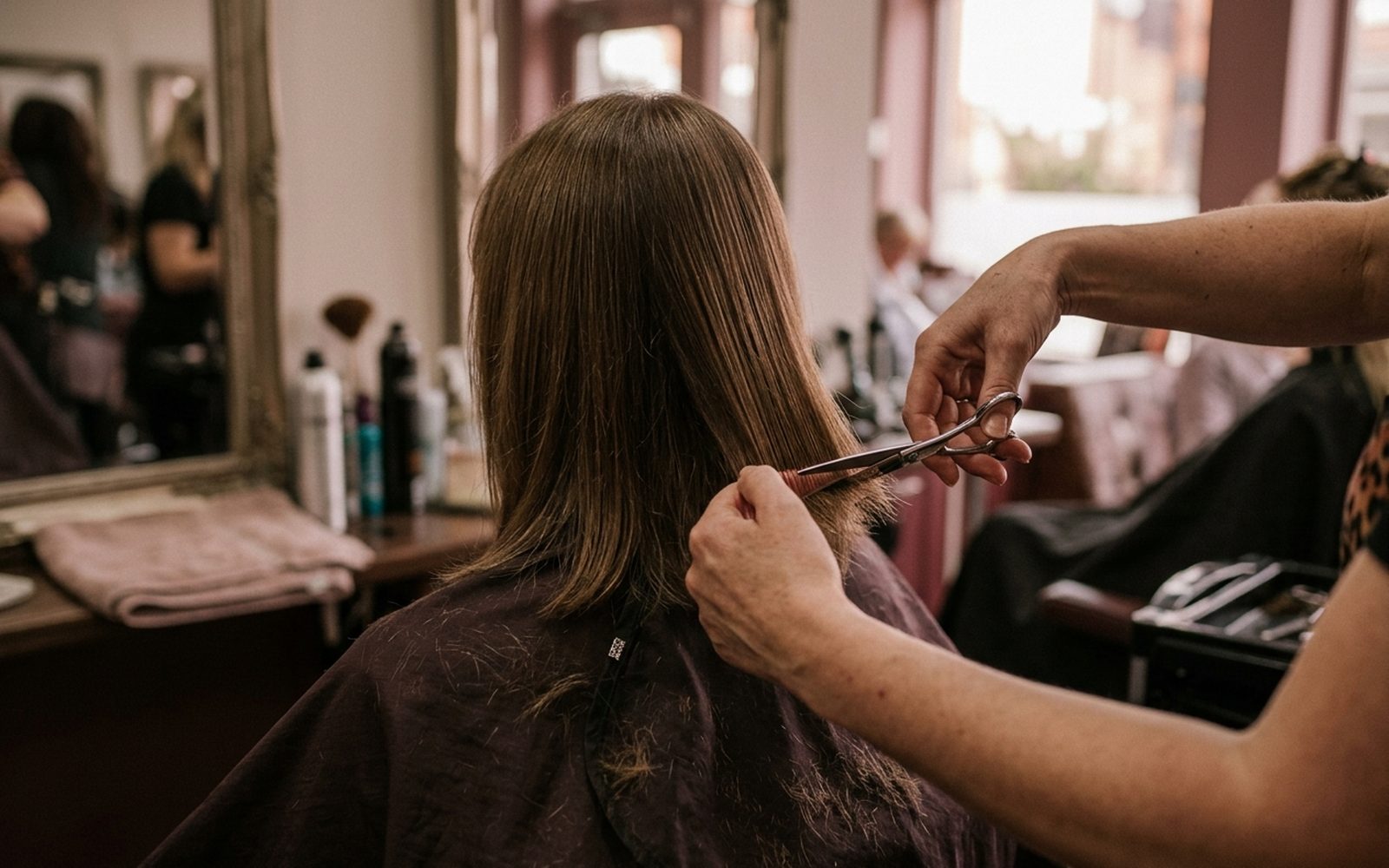
A blunt, one-length baseline. The bottom edge of the hair should be cut straight across, not feathered, thinned or point-cut into wisps. A blunt edge makes the ends look dense; the eye reads a solid line as a lot of hair. This is the single most useful thing you can ask for.
Not sure which one is you?
Take the two-minute hair quiz
Twelve quick questions. We tell you what we think is going on, what to do about it, and we say so if it is something we cannot help with.
Start the quiz →Minimal layering, and only long layers if any. Layers remove weight from the ends and put it at the top, which on thick hair creates movement and on thin hair creates transparency. A few long, soft layers around the face are fine. Layers throughout are not.
A soft, slightly forward fringe if the hairline is the problem. A curtain fringe or a light full fringe covers thinning temples completely and, because the hair is cut short at the front, stands up from the head rather than lying flat. It is the best disguise a receding corner has, and it is reversible.
A side parting, or a zig-zag one. A straight centre parting is a straight line of exposed scalp. Moving the parting an inch to one side breaks the line and lets hair fall over it. Some hairdressers will cut the parting area so that it naturally falls off-centre.
The three that make it worse
Thinning scissors and razoring. Both remove bulk. That is precisely what you cannot afford. If a hairdresser reaches for thinning scissors on your hair, say no.
Heavy layering, particularly “the shag” and choppy layers. These look wonderful on thick hair in photographs and are disastrous on fine hair in real life.
Very long hair kept for the ponytail. It is the most common one. Women grow their hair long because a ponytail is practical with children, and the length is what is making the ponytail look thin. A collarbone-length cut still goes up, and it goes up looking like more.
How to say it to the hairdresser
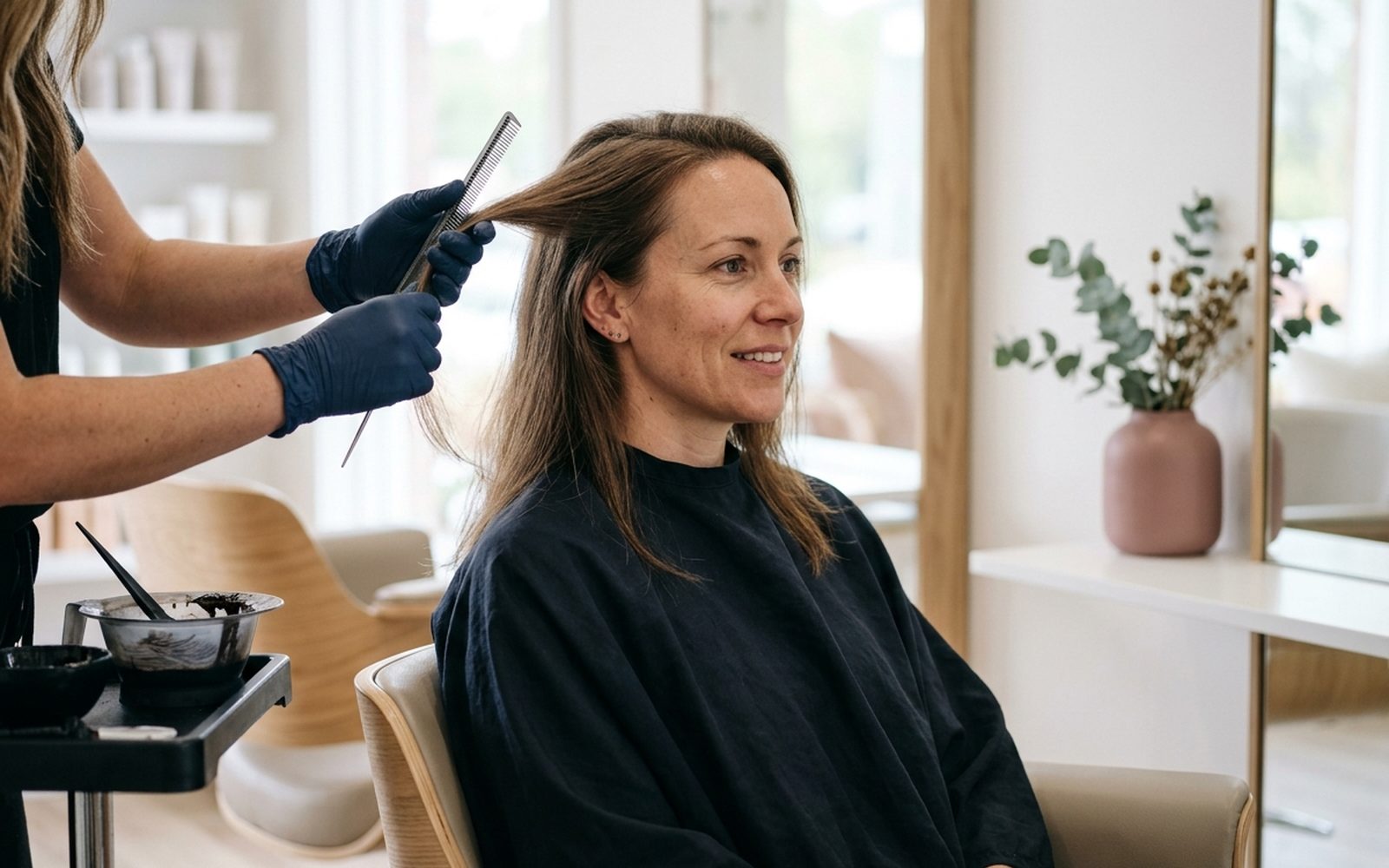
Hairdressers are good at hair and bad at mind-reading, and many women are too embarrassed to say the words. Try: “My hair has thinned since I had the kids and I want a cut that makes it look as thick as possible. Blunt ends, no thinning scissors, minimal layers.” A good stylist will immediately know what to do and will probably be relieved you said it. If they push back and want to “add texture”, it is a polite way of saying they want to thin it out, and you are allowed to hold your ground.
What the cut cannot do
It cannot change what the follicle is doing. A good cut buys you a year or two of looking better while the parting keeps widening beneath it, and there is nothing wrong with taking that year. But if the follicles are miniaturising, the cut will need to get shorter and shorter to keep up, and at some point you run out of cut. That is the moment to look at what is happening underneath, which is what the hairline article and the quiz are for.
Ready to read your own pattern?
Take the two-minute hair quiz
Twelve questions. We tell you what we think is going on for you, and we say so if it is something a GP should see first.
Start the quiz →