The GP appointment
When it is the immune system: autoimmune hair loss in the years after a baby

The year after a baby is the highest-risk period in a woman’s life for the onset of an autoimmune condition. Most of the hair loss I see in mums is hormonal and follicle-level. A minority is the immune system, and it is worth knowing the signs, because those women need a different door.
Why the postnatal year
To tolerate a baby that is half someone else, pregnancy dials the immune system down. After the birth it rebounds, and in women with the genetic tendency it overshoots and begins attacking the body’s own tissues. Thyroiditis, rheumatoid arthritis, lupus, coeliac disease, alopecia areata and type 1 diabetes all cluster in the first postnatal year. Many of them affect hair, and for several of them hair is the first thing the woman notices.
The conditions, and how each shows up in hair
Postpartum and autoimmune thyroiditis. The commonest. Diffuse shedding, dry coarse hair, thinning outer eyebrows, alongside exhaustion, cold, low mood, weight change. Its own article is here.
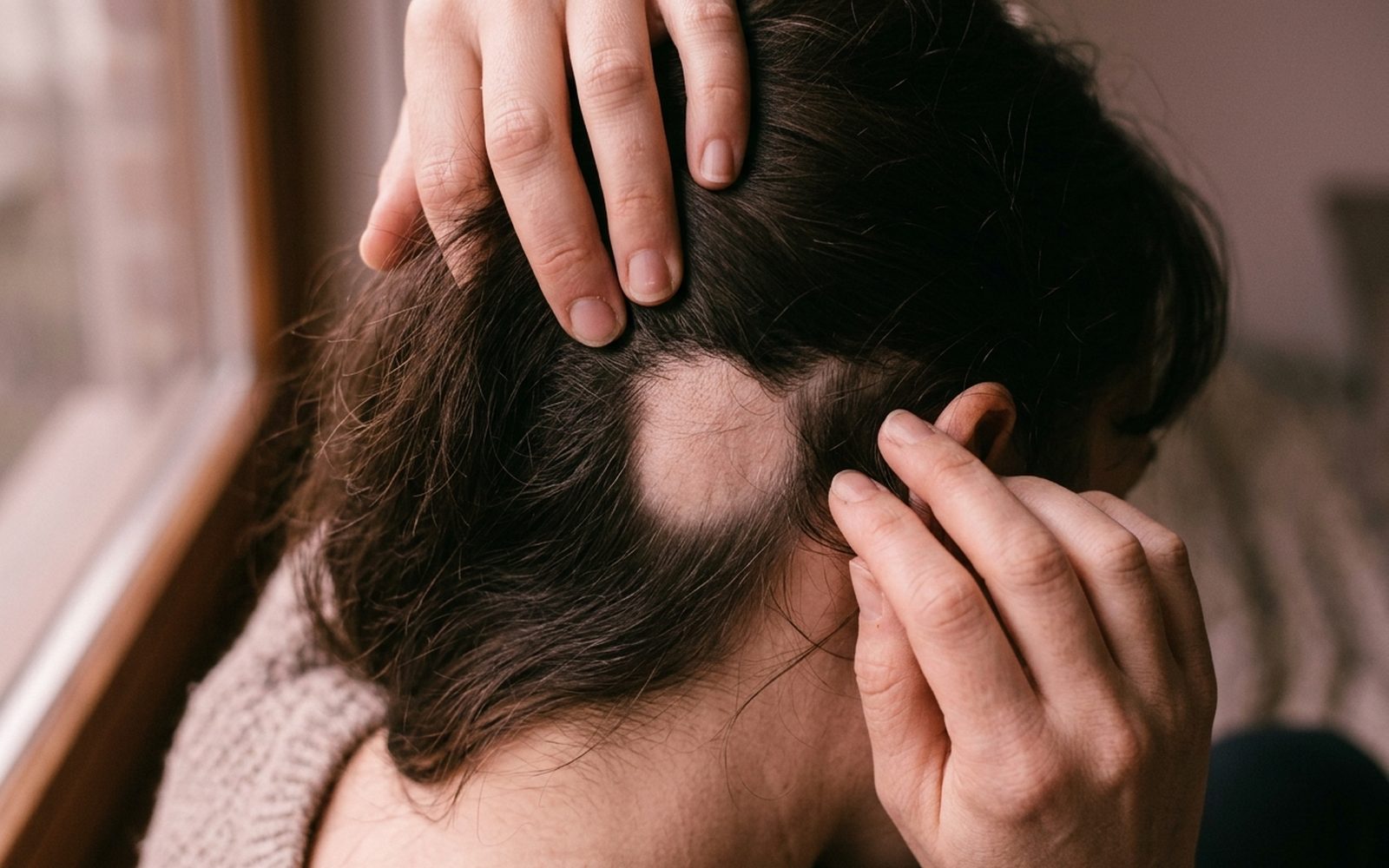
Alopecia areata. Smooth round bald patches, appearing over weeks. Its own article is here.
Not sure which one is you?
Take the two-minute hair quiz
Twelve quick questions. We tell you what we think is going on, what to do about it, and we say so if it is something we cannot help with.
Start the quiz →Coeliac disease. Diffuse thinning from malabsorption of iron, zinc and B vitamins. Often silent apart from bloating, tiredness and an iron level that will not rise despite tablets. Diagnosed by a blood test; the hair recovers on a gluten-free diet once the gut heals.
Lupus. Diffuse thinning with brittle, breaking hairs at the front hairline (“lupus hair”), sometimes patches of scarring loss. Comes with joint pain, fatigue, a rash across the cheeks and nose, mouth ulcers and sensitivity to sunlight. Needs a rheumatologist.
Rheumatoid arthritis. The condition itself causes mild thinning through inflammation; some of the medications used for it (methotrexate especially) cause more. Joint pain and stiffness in the hands and feet, worst in the morning.
Scarring alopecias (lichen planopilaris, frontal fibrosing alopecia). Inflammatory conditions that destroy follicles. Itching, tenderness, redness around follicles, an evenly receding hairline, eyebrow loss. More here. Need a dermatologist, early.
The symptoms that mean you should be tested
Hair loss plus any of: exhaustion out of proportion to the sleep you are getting; joint pain or morning stiffness; a facial rash; mouth ulcers; unexplained weight change; feeling cold all the time; persistent bloating or bowel change; a sore, itchy or scaly scalp; bald patches; eyebrow loss; nail pitting; an iron level that will not respond to iron. One of these alongside hair loss is worth mentioning. Two or more means asking for the tests in this order: thyroid function with antibodies, ferritin, a full blood count, coeliac antibodies, and if there is joint pain or a rash, an autoimmune screen.
What happens to the hair
For most of these, treating the condition brings the hair back over six to twelve months, because the follicles were suppressed rather than destroyed. The exceptions are the scarring conditions, where treatment stops the advance but cannot regrow what has scarred — which is the reason for the emphasis on early diagnosis.
Ready to read your own pattern?
Take the two-minute hair quiz
Twelve questions. We tell you what we think is going on for you, and we say so if it is something a GP should see first.
Start the quiz →