The GP appointment
The coin-sized patch: alopecia areata, and why it needs a GP not a serum

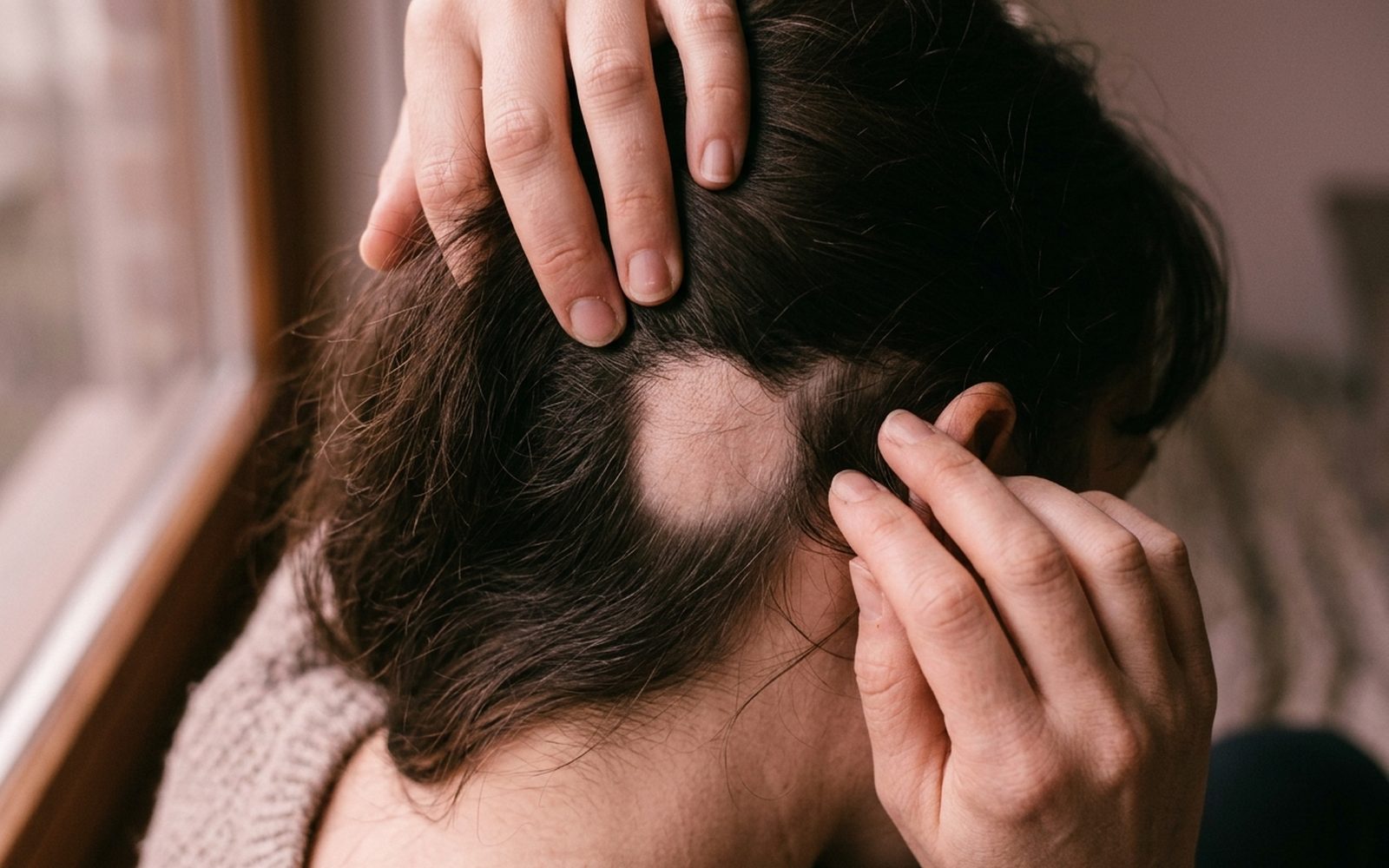
Most of what we write about is slow: a parting that widens over years, a ponytail that loses a little each season. This is about the thing that is fast. A patch, usually round, usually found by a hairdresser or a partner, with skin that looks completely normal and completely bare. It is not thinning. It is alopecia areata, and it has a different cause and a different answer.
What it is
Alopecia areata is an autoimmune condition: the immune system mistakes the growing follicle for something foreign and attacks it. The follicle is not destroyed — it is pushed abruptly into rest and the hair drops out — which is why the skin in the patch is smooth and healthy rather than scarred, and why the hair can come back completely. It affects around two in every hundred people at some point, women slightly more than men, and it clusters in the years after pregnancy because the immune system rebounds after the birth and sometimes overshoots.
What it looks like
One or more round or oval patches, clearly edged, anywhere on the scalp but often at the back or sides, appearing over two to four weeks. Skin in the patch is smooth, normal in colour, not scaly or sore. Around the edge you may see short, broken “exclamation mark” hairs that are thinner at the base than the tip. Fingernails sometimes develop fine pitting. It does not itch, though some women feel a tingle before it appears. Occasionally it affects an eyebrow or the beard area in men.
Why it is not a serum problem
The follicles in the patch are being actively suppressed by immune cells. No topical growth signal, no peptide, no minoxidil, no supplement will override that while the attack is under way. What works is calming the immune response at the patch, and that is prescription treatment.
Not sure which one is you?
Take the two-minute hair quiz
Twelve quick questions. We tell you what we think is going on, what to do about it, and we say so if it is something we cannot help with.
Start the quiz →What the GP can do
For a small number of patches, a potent topical steroid applied to the patch for a few weeks is the first-line treatment and often enough. Steroid injections into the patch, done by a dermatologist, are the most effective treatment for limited disease and are usually available on referral. For more extensive loss there are newer oral treatments — the JAK inhibitors — now approved in the UK for severe alopecia areata and prescribed by dermatology. Ask for the referral; this is a condition dermatology takes seriously.
What to expect
Around half of single small patches regrow on their own within a year, often starting with fine white hairs that then gain colour. Treatment shortens that. Some women have one episode and never another; some have recurrences over years, usually in periods of stress, illness or hormonal change. A patch that has been present for a year without any regrowth, or patches that are joining up, need a dermatologist rather than watching.
The overlap with the other kind of hair loss
Women who have had a patch often also have the slow, hormonal thinning that this site is mostly about, and the two get confused. The patch is immune and needs the GP. The thinning at the temples and parting is hormonal and follicle-level, and it can be treated in the ordinary way alongside, once the patch is under control. The quiz asks about patches specifically so that it can route you to a GP first rather than to a product. If you have one, please go.
Ready to read your own pattern?
Take the two-minute hair quiz
Twelve questions. We tell you what we think is going on for you, and we say so if it is something a GP should see first.
Start the quiz →